**AI-powered** data mining with full transparency into every finding

Full visibility into every rule, policy, and flagged claim–combined with self-service tools and AI-driven rule maintenance to keep your data mining program current and surface new, defensible opportunities.

Illustration of gray gears with a magnifying glass showing a colorful chart inside

Built for speed and scale

Rules built and iterated in hours
Not weeks or months

No IT dependency
Zero IT tickets required

Rule & supporting documentation Updated continuously

Upgrade your data mining program with Cohere Surface™

Most data mining solutions find errors and stop there–and most vendors are happy to keep it that way. Cohere Surface goes further–providing full transparency into why they happen and helping your team act on what's within your control, while continuously surfacing new opportunities. 

The result: a program that keeps getting smarter and stays current automatically–without growing headcount or IT dependency.

Self-service, user-friendly rules builder

Pre-configured rule library across common overpayment categories

Policy catalog with automated monitoring and policy-to-rule linkage

Provider-level and cohort-level pattern detection

AI-driven rule maintenance with human oversight

Flexible deployment and pricing models

Benefits

A data mining solution that puts you in control

Replace IT dependency and vendor opacity with a data mining solution
built for the people who do the work every day

Full transparency into every finding

See exactly why a claim or provider was flagged, what rule logic drove the result, and what policy underpins it. This visibility transforms findings into actionable intelligence–enabling upstream intervention, provider education, and systematic remediation where it's within the plan's control.

Self-service rules and AI-driven maintenance

Self-service tools and pre-configured rules reduce set-up time, improving speed and efficiency across in-house and services-led programs. Once deployed, rules are continuously maintained through automated monitoring of policy updates, CMS guidance, and reference data–ensuring accuracy and program integrity.

Agentic AI at scale

Error-category-specific agents detect patterns, share results, and support rule and documentation updates. The result is a continuously improving data mining program that requires minimal human touch to maintain–and gets smarter each day.

Key Features

The tools to find more, understand more, and act where it counts

Cohere Surface covers the full data mining lifecycle–from building rules to running them, understanding results, keeping everything current, and continuously surfacing new overpayment opportunities as patterns emerge.

Illustration of a computer window with a checkmark symbol and Cohere logo

Self-service rules builder

PI and claims teams build, test, and iterate on rules through a user-friendly interface–no SQL required. Pre-configured rules across common overpayment categories are provided and maintained by Cohere, with configurable run intervals for pre-pay and post-pay workflows.

Policy catalog & reference tables

Every rule is linked to its governing payment policy. When policies change, impacted rules are automatically placed on hold pending review. Reference tables update on a scheduled basis, and a policy comparison tool flags gaps between plan policies and CMS standards.

Illustration of a laptop displaying colorful gears next to copy highlighting EMR integration and end-to-end workflow automation.

Data mining execution & reporting

Rules run at scale against your claims data, with AI agents detecting patterns, flagging exceptions, and keeping rules current in the background. Reporting goes deeper than legacy vendors–hit rate, overpayment amounts, appeal rate, and provider abrasion indicators at the rule level, not just summary totals.

From findings to action

Every transparent finding comes with the context to act–whether that's correcting claims with automated repricing, flagging providers with systemic billing patterns for targeted education, or updating rules to prevent recurrence where possible. Over time, patterns point your team toward new overpayment categories–continuously expanding program scope without expanding headcount.

Illustration of a clipboard with a strategy diagram of arrows, crosses, and circles

Built to work alongside your full payment integrity program

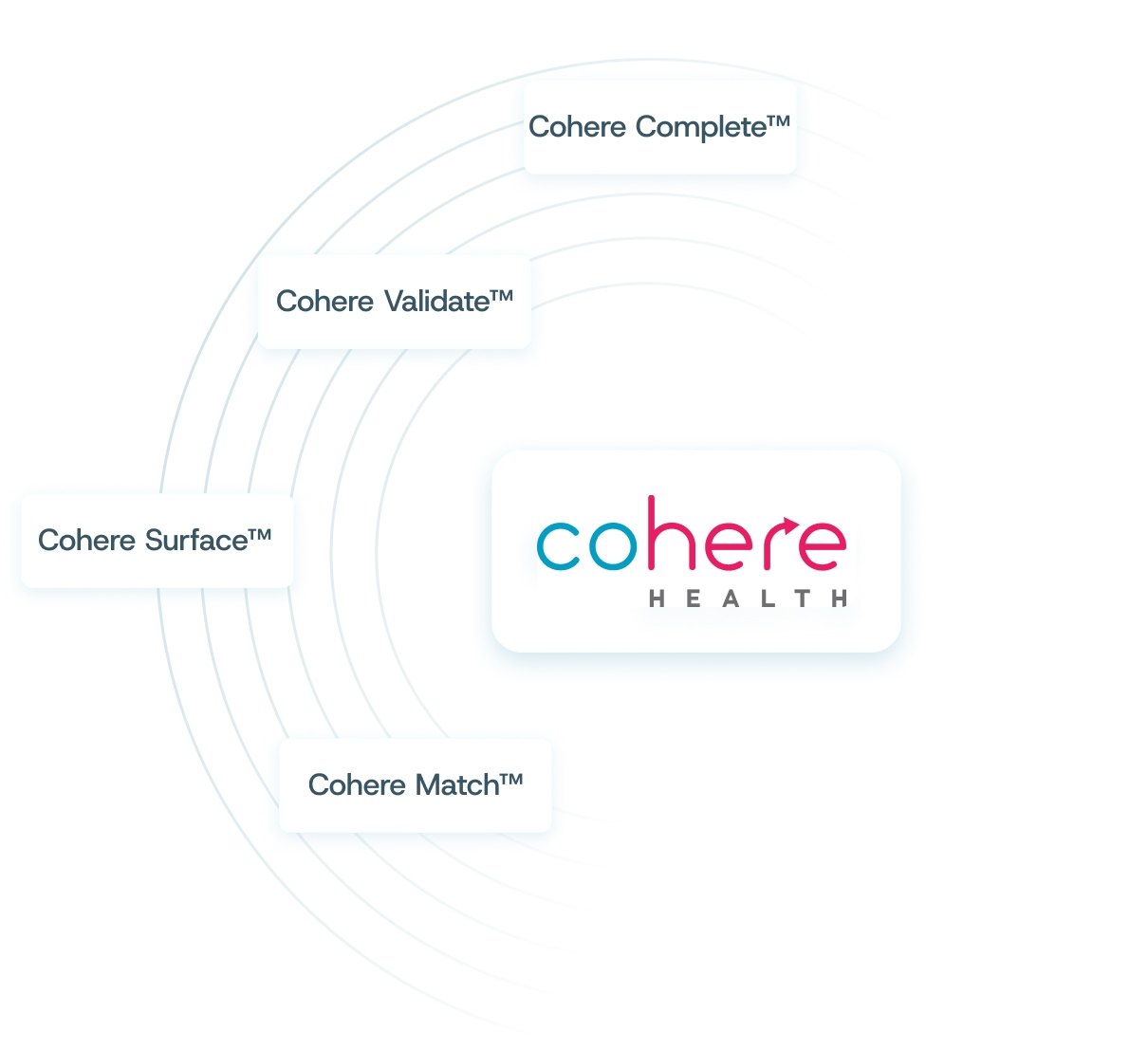
Cohere Surface can be a standalone solution–and is also a natural complement to our existing suite of PI products (Cohere Validate, Cohere Complete for PI, and Cohere Match), creating a single view across your entire payment accuracy lifecycle.
Ready to take your data mining program to the next level?

Join health plans building smarter, faster, more transparent data mining programs–without growing headcount or IT dependency. Schedule a discovery call to see Cohere Surface in action.

Your questions, answered

Find answers to frequently asked questions about Cohere Surface and learn how to create smarter, faster, and more transparent data mining programs.

What types of overpayment scenarios does Cohere Surface address?

Cohere Surface targets systemic, rule-based overpayment patterns that exist across every plan's claims data–duplicate payments, modifier errors, readmissions, bundling issues, contract-level billing discrepancies, and more. These are repeatable, detectable patterns that don't require medical record review. The solution is not designed for fraud detection, subrogation, credit balance, or coordination of benefits.

Do we need IT resources to build and maintain rules?

No. The platform is designed specifically for non-technical PI and claims teams. Your analysts build and iterate on rules through a user-friendly interface–no SQL, no developer support required. Cohere handles ongoing maintenance of the pre-configured rule library and reference tables automatically. IT may be involved in initial data integration and quality assurance, but day-to-day rule creation and maintenance shifts to the claims and PI team.

How is this different from our current contingency vendor?

Legacy contingency vendors deliver savings, but their reporting provides limited visibility into the detail needed to act–which billing pattern, which provider, driven by which policy gap. That’s not accidental: a contingency-based vendor has no financial incentive to help you fix the underlying problem, because doing so reduces future recovery opportunities. Cohere Surface shows you exactly why findings occur–and pricing is structured around real program improvement, not volume.

How does the flexible deployment model work?

Cohere Surface supports in-house, hybrid, and services-supported models. Plans that prefer a services approach get the same findings, transparency, and maintenance–Cohere runs the program, but you own the visibility into every finding.

Can Cohere Surface integrate with our existing claims system?

Yes. The platform is designed to work with your existing adjudication and claims systems. File exchange set-up is required for initial data integration. The automated repricing component may require an API integration with your claims system depending on implementation, and we work with you on the specifics during discovery.

What kind of return on investment can we expect?

Health plans can expect measurable reductions in manual rule build and maintenance time, decreased IT dependency, and a drop in vendor contingency fees. Because our pricing model focuses on actionable insights rather than contingency volume, your incentives are aligned with true medical expense savings and a positive ROI.